Men’s health & Hormones

This isn't only about optimization. It's about feeling like yourself again.

A physician-supervised hormone health program for men who've noticed the change—in energy, clarity, drive, or physical resilience—and want to understand what's actually going on.

  • Restored Energy
  • Mental Clarity
  • Better Recovery
  • Renewed Drive

Most evaluations stop at total testosterone and a shrug. We run the full panel—free T, estradiol, DHT, thyroid, metabolic markers.

The Program

1. Full Hormone Assessment

A comprehensive baseline — not just testosterone, but the complete hormonal and metabolic context. This is what allows us to build a protocol that addresses what's actually happening rather than what's assumed.

2. A Protocol Built Around You

Testosterone replacement therapy is available in the form that fits your life: injections, creams, or pellets.

3. Implementation & Ongoing Support

Evening clinic hours are available. In-office injection services for those who prefer it. Dr. Wasserman is reachable directly throughout.

4. Ongoing Monitoring

Quarterly labs. Adjustments based on how you actually respond. The goal is sustained improvement, not an initial intervention with no follow-through.

⚠️ Note

The styling of this section / content will be manipulated with javascript and won't look the same as it does here

(Also no need to delete this note block as it won't be visible in live site!)

Frequently Asked Questions

1. Comprehensive Hormone Assessment

Complete medical history, physical examination, and comprehensive hormone testing including total/free testosterone, estradiol, DHT, thyroid function, growth hormone, and complete metabolic panel to establish your baseline and identify optimization opportunities.

2. Customized Hormone Treatment Plan

Development of your individualized hormone optimization protocol incorporating testosterone replacement therapy options (injections, creams, pellets), peptide therapy selections, growth hormone protocols, and estrogen management strategies based on your specific needs and goals.

3. Treatment Implementation

Begin your supervised hormone optimization with prescribed treatments, professional injection services available, and ongoing support. Evening clinic hours available for working professionals, EMS, police, and firefighters with flexible scheduling options.

4. Ongoing Hormone Monitoring

Regular follow-up appointments with Dr. Wasserman, quarterly lab monitoring, treatment adjustments based on results and symptoms, and 24/7 text access for questions about dosing, side effects, and optimization strategies.

Medications

Heading 1

Heading 2

Heading 3

Heading 4

Heading 5
Heading 6

Lorem ipsum dolor sit amet, consectetur adipiscing elit, sed do eiusmod tempor incididunt ut labore et dolore magna aliqua. Ut enim ad minim veniam, quis nostrud exercitation ullamco laboris nisi ut aliquip ex ea commodo consequat. Duis aute irure dolor in reprehenderit in voluptate velit esse cillum dolore eu fugiat nulla pariatur.

Block quote

Ordered list

  1. Item 1
  2. Item 2
  3. Item 3

Unordered list

  • Item A
  • Item B
  • Item C

Text link

Bold text

Emphasis

Superscript

Subscript

 Board certified. Personally involved in your care.

Dr. Marmax - board certified obesity medicine physician and medical weight loss specialist

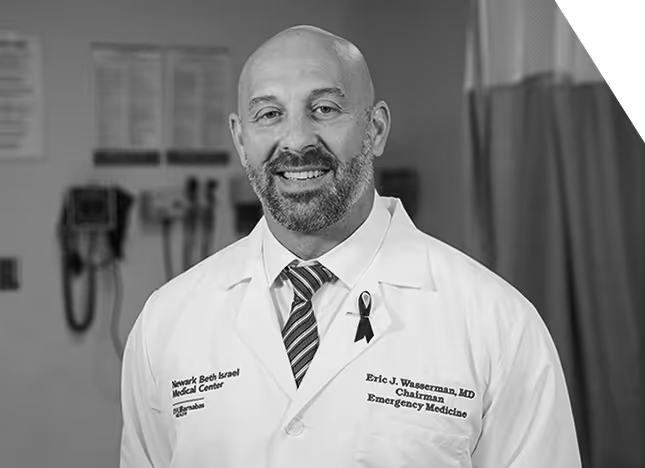
Dr. Wasserman holds dual board certification in Emergency Medicine and Obesity Medicine — one of a limited number of physicians in the country to hold both. His approach to weight and metabolic health is rooted in understanding the mechanisms driving your specific challenges and addressing them at the source.

Frequently Asked Questions

What is male HRT/TRT, and how do I know if I need it?

Male Hormone Replacement Therapy—often called Testosterone Replacement Therapy (TRT)—is designed to restore testosterone to optimal, healthy levels in men experiencing hypogonadism (low T). Common signs of low testosterone include persistent fatigue, reduced sex drive or erectile dysfunction, loss of muscle mass, increased body fat, mood changes, and difficulty focusing ("brain fog"). Diagnosis requires a clinical evaluation paired with blood tests to measure your total and free testosterone levels.

Is testosterone replacement therapy safe?

When prescribed and monitored by a qualified healthcare provider, TRT is generally safe and effective. Before starting treatment, your doctor will evaluate your health history and screen for underlying risks. While on TRT, routine blood work is conducted to monitor your testosterone levels, red blood cell count (hematocrit), prostate health (PSA), and lipid profiles to ensure treatments remain within a safe, therapeutic range.

How is TRT administered, and which option is best?

TRT can be administered in several ways, depending on your lifestyle and preference:
Intramuscular Injections: Typically given weekly or bi-weekly; often considered the most predictable and cost-effective method.
Topical Gels or Creams: Applied daily to clean, dry skin (such as the shoulders or arms).
Subcutaneous Pellets: Small pellets inserted under the skin that slowly release testosterone over 3 to 6 months.
Oral or Buccal Formulations: Newer oral options or patches placed against the gums.
Your medical provider will help you choose the administration method that best aligns with your daily routine and therapeutic goals.

How long does it take to notice results from TRT?

Timeline improvements vary depending on the symptom, but most men begin noticing changes within a few weeks:
Sexual Health & Energy: Improvements in libido, energy, and mood often begin within 3 to 6 weeks.
Body Composition & Strength: Changes in muscle mass, fat loss, and strength typically become noticeable after 3 to 6 months of consistent treatment alongside proper diet and exercise.

Will TRT affect my fertility and natural hormone production?

Yes. Exogenous testosterone signals your body to decrease or stop its own natural production of testosterone and sperm. If you are planning to have children soon, standard TRT may not be recommended right away. However, your provider can discuss alternative or complementary treatments—such as Human Chorionic Gonadotropin (hCG) or Enclomiphene—to help preserve testicle function and fertility while addressing symptoms.

Do I need to stay on TRT indefinitely?

TRT is typically a long-term or lifelong commitment because it treats the underlying symptom of low production, not the root cause of aging or testicular insufficiency. Stopping TRT will cause your hormone levels to gradually return to their pre-reatment baseline, along with the return of low-T symptoms. Your provider will continually evaluate your progress and adjust your protocol to maintain optimal long-term health.


⚠️ Note

The styling of this section / content will be manipulated with javascript and won't look the same as it does here

(Also no need to delete this note block as it won't be visible in live site!)

Frequently Asked Questions

1. Comprehensive Hormone Assessment

Complete medical history, physical examination, and comprehensive hormone testing including total/free testosterone, estradiol, DHT, thyroid function, growth hormone, and complete metabolic panel to establish your baseline and identify optimization opportunities.

2. Customized Hormone Treatment Plan

Development of your individualized hormone optimization protocol incorporating testosterone replacement therapy options (injections, creams, pellets), peptide therapy selections, growth hormone protocols, and estrogen management strategies based on your specific needs and goals.

3. Treatment Implementation

Begin your supervised hormone optimization with prescribed treatments, professional injection services available, and ongoing support. Evening clinic hours available for working professionals, EMS, police, and firefighters with flexible scheduling options.

4. Ongoing Hormone Monitoring

Regular follow-up appointments with Dr. Wasserman, quarterly lab monitoring, treatment adjustments based on results and symptoms, and 24/7 text access for questions about dosing, side effects, and optimization strategies.

The first step is a conversation

A consultation to understand your baseline, your symptoms, and whether this program makes sense for you. In person or virtual.